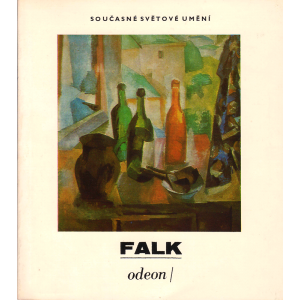

Monografická studie, kladoucí si za cíl nastínit českému čtenáři složitý vývoj díla a načrtnout v úhrnných rysech lidský a umělecký profil Roberta Rafailoviče Falka.

B. V. Pavlovsky: Decorative Arts of Industrial Urals. Autor pojal tuto knihu jako pokus charakterizovat přínos Uralu do pokladnice ruského umění. Pokud jde o umění průmyslového Uralu jako důležité studnice ruského umění, chtěl autor především podrobně popsat jeho původ a historický vývoj, předpoklady a podmínky jeho pokroku i jeho nejtypičtější rysy.

Welt der Kunst. András Székely: Mihály Munkácsy. Mit siebzehn farbigen Tafeln und dreissig einfarbigen Abbildungen. Henschelverlag - Berlin 1977. Corvina - Budapest - Arkady - Warszawa. Originaltitel: Munkácsy. Corvina Kiadó Budapest, 1977. Übersetzt von Álmos Csongár.

Der deutsche Impressionismus: Die Hauptmeister in der Malerei. Begleittext von Karl Römpler. Verlag der Kunst Dresden.

Das 15. und 16. Jahrhundert werden oft als das goldene Zeitalter der deutschen Malerei bezeichnet und brachten eine stolze Reihe grosser Künstler hervor. Als die drei grössten galten dem Humanisten Melanchthon: Albrecht Dürer, Matthias Grünewald und Lucas Cranach der Ältere. Melanchthons Urteil hat bis heute nichts an Gültigkeit verloren, und Lucas Cranachs Name bewahrte seinen Glanz.
Publikace představuje tvorbu pozdně gotického sochaře Tilmana Riemenschneidera prostřednictvím vybraných fotografií Günthera a Klause Beyerových. Kniha zachycuje detaily soch i výrazové nuance, které odhalují citlivý přístup autora k lidské postavě a duchovní hloubku jeho děl. Výtvarný obsah je doplněn komentářem, jenž umožňuje lépe porozumět Riemenschneiderovu místu v evropském sochařství.

Průvodce historickou expozicí Národního muzea v Lobkovickém paláci. Expozice sleduje vývoj českého národa na území Čech a Moravy, s přihlédnutím ke vztahům s bratrským národem Slováků, ve třech tematických rovinách: v oblasti politické, hospodářskosociální a kulturní.

Sammlung Kultugeschichte. Aus dem Inhalt: Urformen des Schmucks - Altsteinzeit, Jungsteinzeit, Bronzezeit, Australien, Melanesien, Prätieindianer Nordamerikas, Afrika

“As well as being a deadly weapon and a unique work of art, the sword in Japan is imbued with a spiritual essence. An appreciation of such beauty, deriving from the laws of nature, is central to the Japanese aesthetic. Like the study of ceramics, the study of the Japanese sword blade as an art form is the study of technical excellence, elegance of shape and beauty of texture.”

Zur Kunst- und Kulturgeschichte der Berliner Porzellanmanufakturen im 18. und 19. Jahrhundert. Mit Fotos von Walter Danz.
Monografická studie, kladoucí si za cíl nastínit českému čtenáři složitý vývoj díla a načrtnout v úhrnných rysech lidský a umělecký profil Roberta Rafailoviče Falka.